Recovered
YeArs Experience
or You Don’t Owe Us a Dime
Recovered
YeArs Experience
or You Don’t Owe Us a Dime
An invitee is invited by the property owner for business or as a member of the public, such as a customer in a coffee shop.
Property owners owe invitees the highest level of care. They must take reasonable measures to make the premises safe for invitees and warn of dangers they know or should know about. There may be an obligation to regularly inspect the property for dangers.
However, if an invitee acts recklessly or ignores hazardous warning signs, it could eliminate the property owner’s liability. For example, if a customer in a store slipped on a wet floor and there was a wet floor sign, the property owner might not be held liable. Alabama does not allow injured victims to seek any compensation if they are even one percent at fault.
Private property owners, such as owners of residential homes and private businesses, have the legal duty to ensure the safety of visitors. Their responsibility often includes:
Public properties are managed by local or state governments and include parks, government buildings and sidewalks. Local or state entities can be liable if it is proven they are responsible for negligence. However, these claims can be even more complicated, as there are specific requirements and deadlines for claims against governments.
If the property is rented, occupants or tenants may be responsible for maintaining safe conditions in the area they reside or control. For example, this may mean they must oversee replacing broken light fixtures or floor tiles.
In some cases, business employees can be held liable if their actions or negligence contributed to the hazardous condition. For example, if a store employee leaves products or debris on a floor where customers walk by, they could be liable for a victim’s injury. However, liability often shifts to the property owner or manager of the employees. This is done through the principle of vicarious liability.
If a third-party contractor was responsible for maintaining the property and failed to do so properly, they could also be liable. The experienced lawyers at Andy Citrin Injury Attorneys understand the many factors involved in liability for a slip and fall. Contact us today to learn how we may be able to help you.
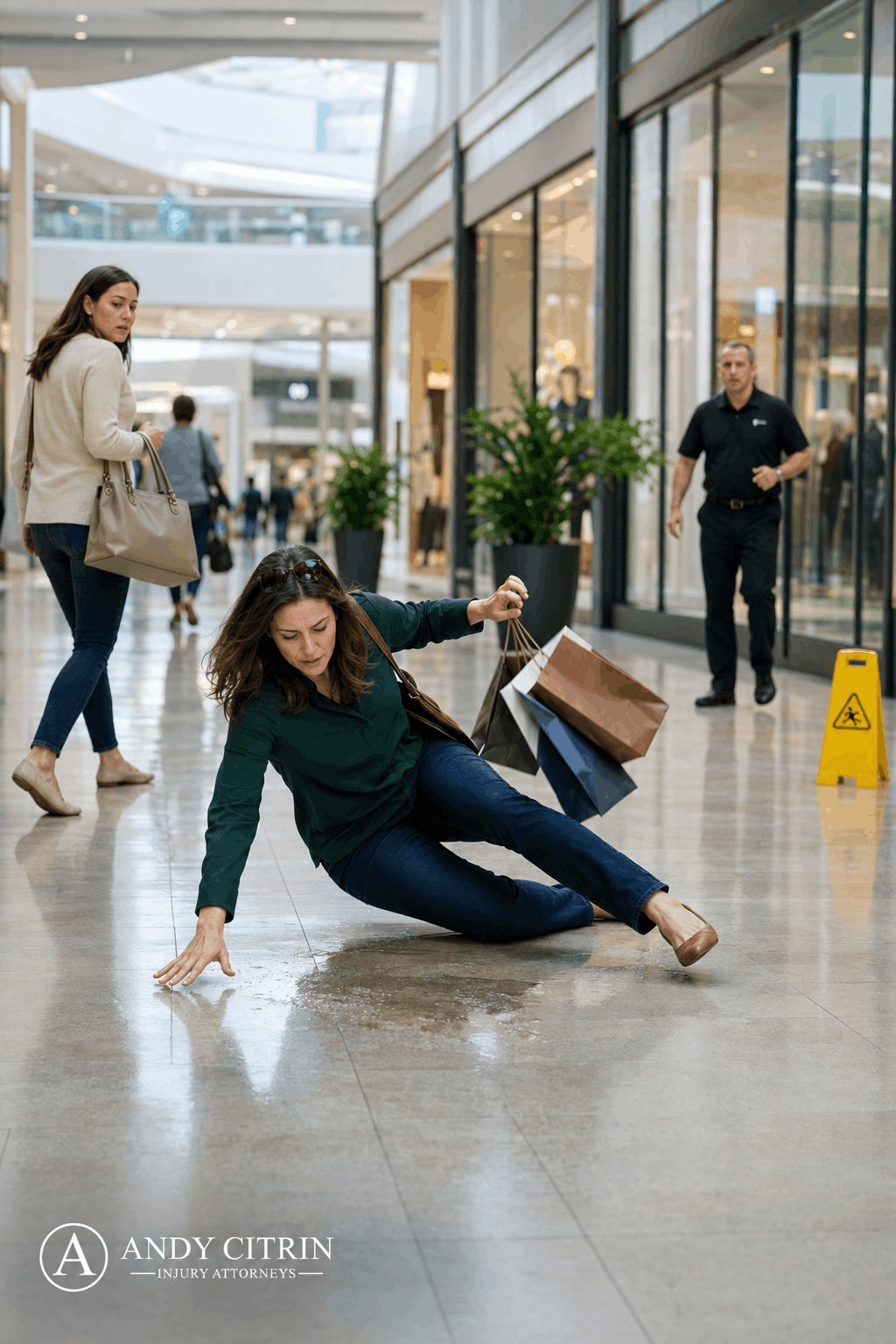
Private property owners, such as owners of residential homes and private businesses, have the legal duty to ensure the safety of visitors. Their responsibility often includes:
Public properties are managed by local or state governments and include parks, government buildings and sidewalks. Local or state entities can be liable if it is proven they are responsible for negligence. However, these claims can be even more complicated, as there are specific requirements and deadlines for claims against governments.
If the property is rented, occupants or tenants may be responsible for maintaining safe conditions in the area they reside or control. For example, this may mean they must oversee replacing broken light fixtures or floor tiles.
In some cases, business employees can be held liable if their actions or negligence contributed to the hazardous condition. For example, if a store employee leaves products or debris on a floor where customers walk by, they could be liable for a victim’s injury. However, liability often shifts to the property owner or manager of the employees. This is done through the principle of vicarious liability.
If a third-party contractor was responsible for maintaining the property and failed to do so properly, they could also be liable. The experienced lawyers at Andy Citrin Injury Attorneys understand the many factors involved in liability for a slip and fall. Contact us today to learn how we may be able to help you.
Each case is unique, making a detailed evaluation by an experienced Mobile slip and fall accident lawyer important.
None of it is recoverable, however, if you wait too long to file. Alabama gives you two years from the date of your fall to bring a premises-liability claim. Miss that window and the value of the case drops to zero, no matter how badly you were hurt or how clearly the property owner was at fault.
Potential compensation could include:
Cost of emergency room visits
Hospital stays
Surgeries
Medications
Any necessary medical supplies associated with treating your injuries
And more
Physical therapy
Occupational therapy
Other treatments to restore function and mobility
The short answer is that you should consult an experienced law firm to review your legal options and determine if another party may be held liable.
The answer to the question of whether you have a case depends on many factors, which may include:
Has the property been neglected? Does the property owner keep up with the maintenance?
Did the owner know, or should the owner have known, about the unsafe condition?
Did the property owner take reasonable steps to prevent the accident? For example, was there a wet floor warning sign at the time of the incident?
This matters more in Alabama than in almost any other state. Any share of fault assigned to you — however small — can end your claim completely. See Alabama's Contributory Negligence Rule below.
Our Mobile slip and fall accident lawyers know the complexities of these cases and how to accurately determine your legal rights. The bottom line is this: if you slipped and fell on another’s property and suffered an injury, and you think the incident could have been prevented, you should seriously consider calling a lawyer to discuss your next steps.
If you or someone you care about has suffered a slip and fall injury requiring medical treatment, you may be eligible to seek financial compensation for medical bills, lost wages and other relevant damages.
Our founder Andy Citrin has been recognized as one of the top 100 trial lawyers in all of Alabama and our law firm has recovered millions in compensation on behalf of our clients. We believe that everyone should have access to premium quality legal counsel and charge no upfront fees to help determine if you have a case and there are no upfront fees while we work on your case.
In most states, being partly at fault only reduces what you recover. Alabama is different. As a pure contributory negligence state — one of only a small handful left — if a jury finds you bear any responsibility for your own fall, even one percent, you recover nothing at all.
That gives the property owner’s insurer an easy target: they don’t have to prove the floor was safe, only that you weren’t careful enough — you should have seen the spill, you were looking at your phone, you said “I wasn’t looking” at the scene. We counter it by moving fast on the evidence they control, including surveillance footage, inspection logs and prior complaints about the same hazard, much of which is overwritten within weeks. Talk to a lawyer before you give any adjuster a recorded statement — in Alabama that conversation carries more weight than it would almost anywhere else.
If you were injured due to a property owner’s negligence, you would benefit from meeting with a licensed attorney who can assess your legal options.
The experienced attorneys at our firm have obtained millions for those injured by negligence. We take on the legal process, so our clients do not have to. We negotiate with insurers, gather evidence and advise clients through every phase of the legal process.
Contact our office today to schedule your free consultation.
Before you hire anyone, these are the questions worth asking — of us or of any firm you’re considering.
| Premises-liability trial experience specifically | These cases turn on evidence most personal-injury practices rarely handle — inspection logs, maintenance schedules, surveillance retention policies. Ask how many premises cases the firm has tried, not how many it has settled. |
|---|---|
| Documented results, not adjectives | Ask for amounts, injury types, and where the case was resolved. A firm that has obtained real premises-liability results can tell you about them. |
| A clear answer on contributory negligence | Ask directly: how will you handle the argument that I was partly at fault? In Alabama that defense decides cases. A lawyer who treats it as a minor issue hasn’t tried many of these. |
| Contingency terms in writing | Confirm what percentage the firm takes, who advances case costs, and what you owe if the case is lost. Get it on paper before you sign. |
To discuss your fall with an attorney at our firm, call (251) 325-6846. Consultations are free and there is no fee unless we recover compensation for you.
Your Mobile slip and fall accident lawyer must prove several critical elements to establish liability in a slip and fall case:
Your lawyer must demonstrate that the property owner knew about the hazard or that he or she should have reasonably known about it through regular inspections.
A Mobile slip and fall case is filed in Mobile County Circuit Court, and the two-year deadline runs from the day you fell — not from the day you found out how serious your injuries were. That matters, because the evidence that proves liability degrades long before the deadline arrives. Surveillance footage is routinely overwritten within weeks. Staff turn over. Hazards get repaired, and the repair itself erases the proof. Waiting until year two often means litigating without the records that would have won the case in month one.
These types of evidence can support your case:
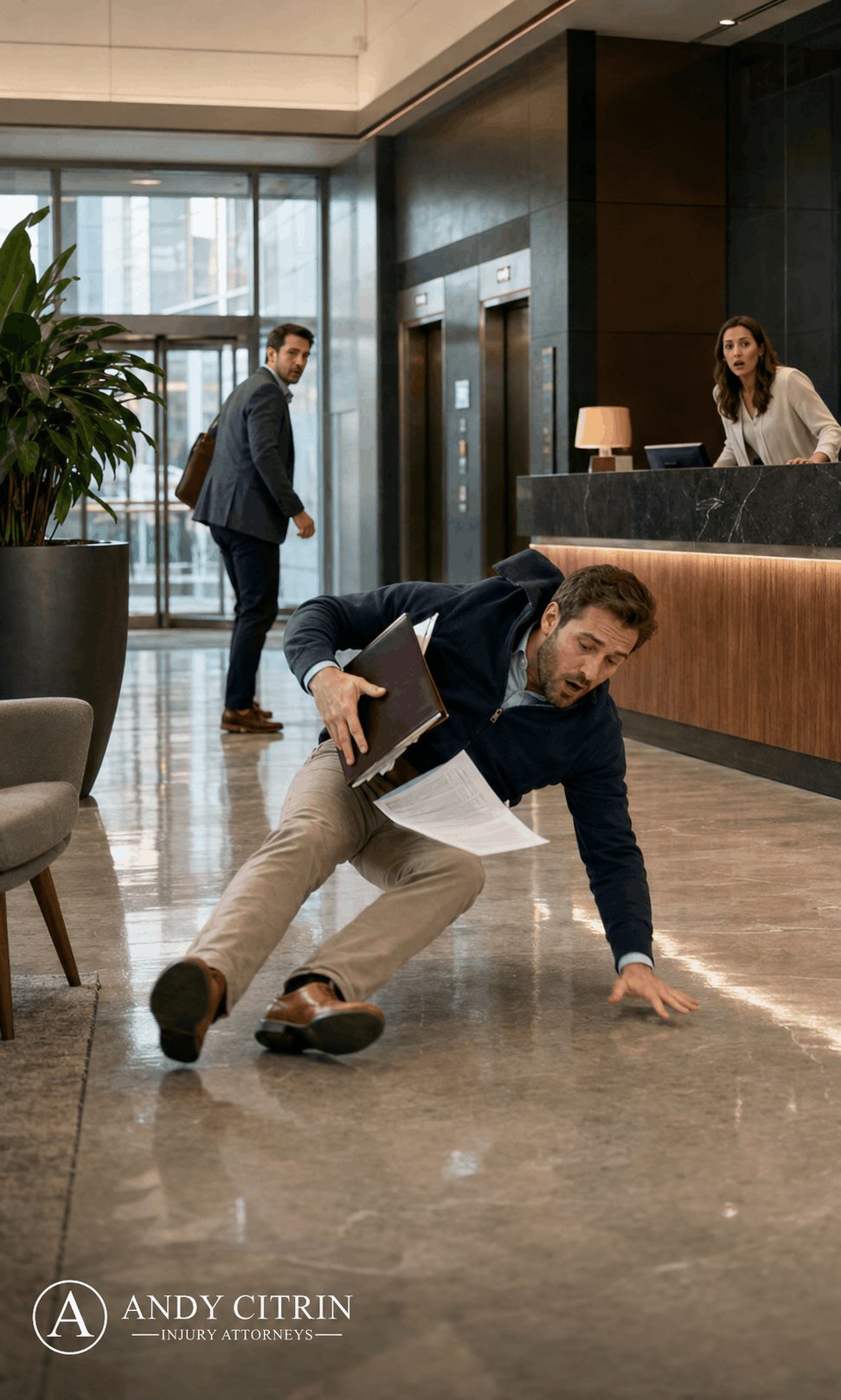
Wet or slippery surfaces (spills, cleaning residue, ice, rain)
Uneven flooring or sudden changes in floor level
Loose or unsecured carpeting
Poor lighting conditions
Cluttered walkways
Loose electrical cords or cables
Misplaced objects in high-traffic areas
Damaged or poorly maintained stairs
Faulty or missing handrails
Cracked or uneven sidewalks
Potholes in parking lots or walkways
Hidden obstacles in grassy areas
Lack of proper warning signs near known hazards
Recently waxed or polished floors
Threshold strips between different flooring materials
Unmarked steps or slight elevation changes
Grocery stores and supermarkets
Shopping malls and retail outlets
Restaurants and food courts
Office buildings and workplaces
Hotels and resorts
Apartment complexes and condominiums
Hospitals and medical facilities
Schools and universities
Public sidewalks and walkways
Parking lots and garages
Staircases and elevators
Entertainment venues (theaters, stadiums, etc.)
Public transportation areas (bus stops, train stations)
Construction sites
Parks and recreational areas
Private homes and residences
Swimming pool areas
Nursing homes and assisted living facilities
Banks and financial institutions
Government buildings and courthouses
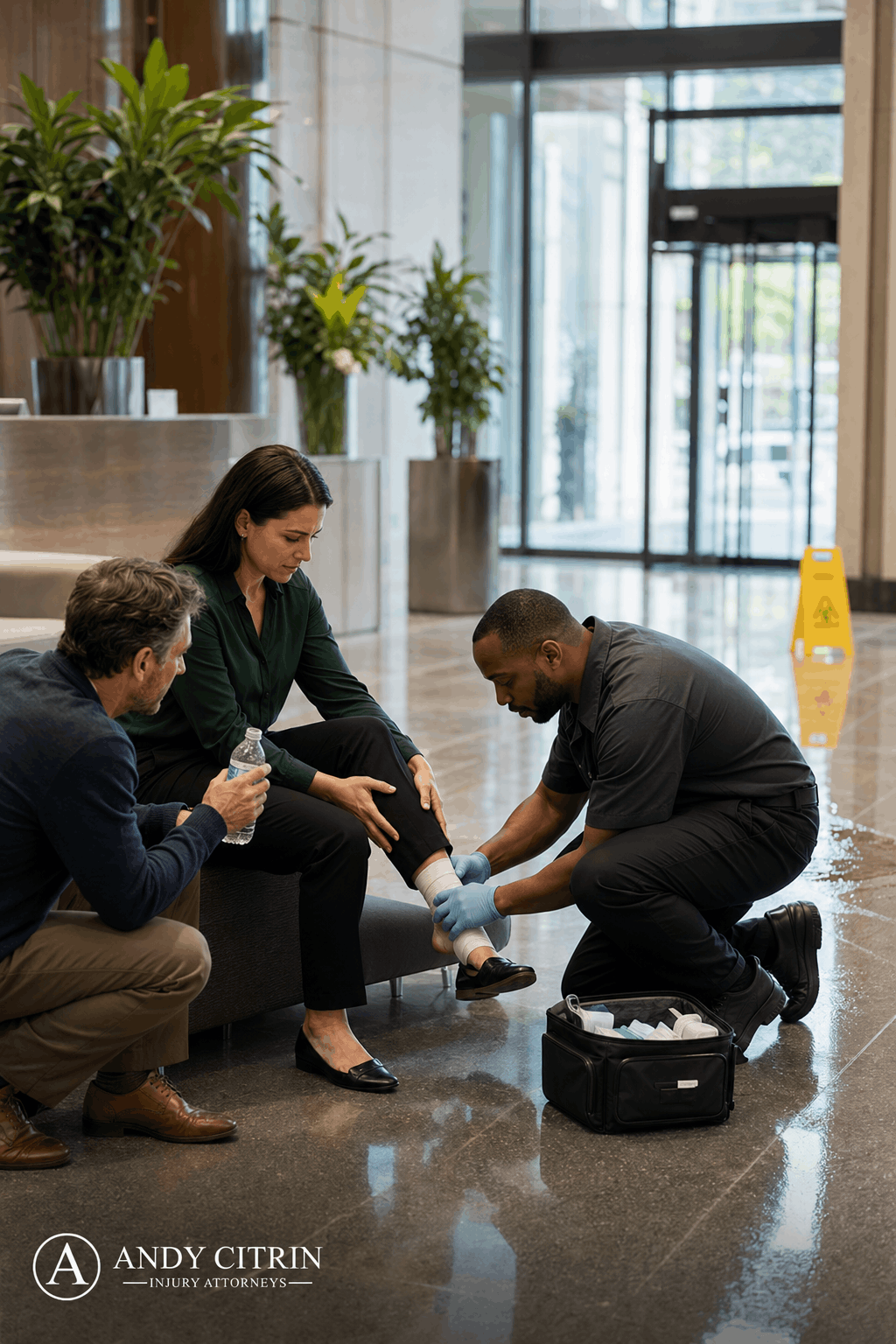
Wet or slippery surfaces (spills, cleaning residue, ice, rain)
Uneven flooring or sudden changes in floor level
Loose or unsecured carpeting
Poor lighting conditions
Cluttered walkways
Loose electrical cords or cables
Misplaced objects in high-traffic areas
Damaged or poorly maintained stairs
Faulty or missing handrails
Cracked or uneven sidewalks
Potholes in parking lots or walkways
Hidden obstacles in grassy areas
Lack of proper warning signs near known hazards
Recently waxed or polished floors
Threshold strips between different flooring materials
Unmarked steps or slight elevation changes
Grocery stores and supermarkets
Shopping malls and retail outlets
Restaurants and food courts
Office buildings and workplaces
Hotels and resorts
Apartment complexes and condominiums
Hospitals and medical facilities
Schools and universities
Public sidewalks and walkways
Parking lots and garages
Staircases and elevators
Entertainment venues (theaters, stadiums, etc.)
Public transportation areas (bus stops, train stations)
Construction sites
Parks and recreational areas
Private homes and residences
Swimming pool areas
Nursing homes and assisted living facilities
Banks and financial institutions
Government buildings and courthouses
You must prove your injury resulted from the hazardous condition on the property.
After a slip and fall, see a doctor to document your injuries. Medical records can prove injuries and show if the incident made preexisting conditions worse.
Slip and fall accidents can cause serious, debilitating injuries such as:
Dislocated joints can cause significant pain, impair your mobility and often require repositioning and physical therapy to restore full function.
Broken bones are serious injuries that can require surgery, bed rest and prolonged rehabilitation, impacting your daily activities and quality of life.
Concussions can lead to headaches, dizziness and cognitive issues, requiring careful medical observation and rest to prevent further complications.
Traumatic brain injuries can range from mild to severe, potentially causing long-term cognitive, physical and emotional challenges that may require extensive rehabilitation.
Herniated discs and other spine injuries can result in chronic pain and limited mobility. Surgical intervention may be needed to alleviate symptoms and prevent long-term disability.
Neck and back injuries can lead to persistent pain and discomfort, potentially affecting your ability to perform everyday tasks.
Internal injuries, such as organ damage or internal bleeding, are life-threatening and require immediate medical intervention to prevent severe health complications or even death.
You must prove your injury resulted from the hazardous condition on the property.
After a slip and fall, see a doctor to document your injuries. Medical records can prove injuries and show if the incident made preexisting conditions worse.
Slip and fall accidents can cause serious, debilitating injuries such as:
Dislocated joints can cause significant pain, impair your mobility and often require repositioning and physical therapy to restore full function.
Broken bones are serious injuries that can require surgery, bed rest and prolonged rehabilitation, impacting your daily activities and quality of life.
Concussions can lead to headaches, dizziness and cognitive issues, requiring careful medical observation and rest to prevent further complications.
Traumatic brain injuries can range from mild to severe, potentially causing long-term cognitive, physical and emotional challenges that may require extensive rehabilitation.
Herniated discs and other spine injuries can result in chronic pain and limited mobility. Surgical intervention may be needed to alleviate symptoms and prevent long-term disability.
Neck and back injuries can lead to persistent pain and discomfort, potentially affecting your ability to perform everyday tasks.
Internal injuries, such as organ damage or internal bleeding, are life-threatening and require immediate medical intervention to prevent severe health complications or even death.
You must prove you had a legal right to be the property, either as an invitee or licensee. Trespassers typically have limited rights under premises liability law.
These are the types of evidence that may show you had the legal right to be on the property:
You must prove you had a legal right to be the property, either as an invitee or licensee. Trespassers typically have limited rights under premises liability law.
These are the types of evidence that may show you had the legal right to be on the property:

Mobile Slip and Fall Lawyer