Recovered
YeArs Experience
or You Don’t Owe Us a Dime
Recovered
YeArs Experience
or You Don’t Owe Us a Dime
If you were injured due to a property owner’s negligence in Daphne or anywhere in Baldwin County, you would benefit from meeting with a licensed attorney who can assess your legal options.
The experienced attorneys at Andy Citrin Injury Attorneys have obtained millions for those injured by negligence. We take on the legal process so our clients do not have to. We negotiate with insurers, gather evidence and advise clients through every phase of the legal process.
Contact our Daphne office today to schedule your free consultation.
If you or someone you care about has suffered a slip and fall injury in Daphne requiring medical treatment, you may be eligible to seek financial compensation for medical bills, lost wages and other relevant damages.
Our founder Andy Citrin has been recognized as one of the top 100 trial lawyers in all of Alabama and our law firm has recovered millions in compensation on behalf of our clients. We believe that everyone should have access to premium quality legal counsel and charge no upfront fees to help determine if you have a case, and there are no upfront fees while we work on your case.
The short answer is that you should consult an experienced law firm to review your legal options and determine if another party may be held liable.
The answer to the question of whether you have a case depends on many factors, which may include:
Has the property been neglected? Does the property owner keep up with the maintenance?
Did the owner know, or should the owner have known, about the unsafe condition?
Did the property owner take reasonable steps to prevent the accident? For example, was there a wet floor warning sign at the time of the incident?
Was the injured party behaving recklessly? For example, were they under the influence of drugs or alcohol?
The short answer is that you should consult an experienced law firm to review your legal options and determine if another party may be held liable.
The answer to the question of whether you have a case depends on many factors, which may include:

Has the property been neglected? Does the property owner keep up with the maintenance?
Did the owner know, or should the owner have known, about the unsafe condition?
Was the injured party behaving recklessly? For example, were they under the influence of drugs or alcohol?
Regular maintenance
Prompt repair of hazards
Clear communication of risks
And more
Regular maintenance
Prompt repair of hazards
Clear communication of risks
And more
If a third-party contractor was responsible for maintaining the property and failed to do so properly, they could also be liable.
The experienced lawyers at Andy Citrin Injury Attorneys understand the many factors involved in liability for a Daphne slip and fall. Contact us today to learn how we may be able to help you.
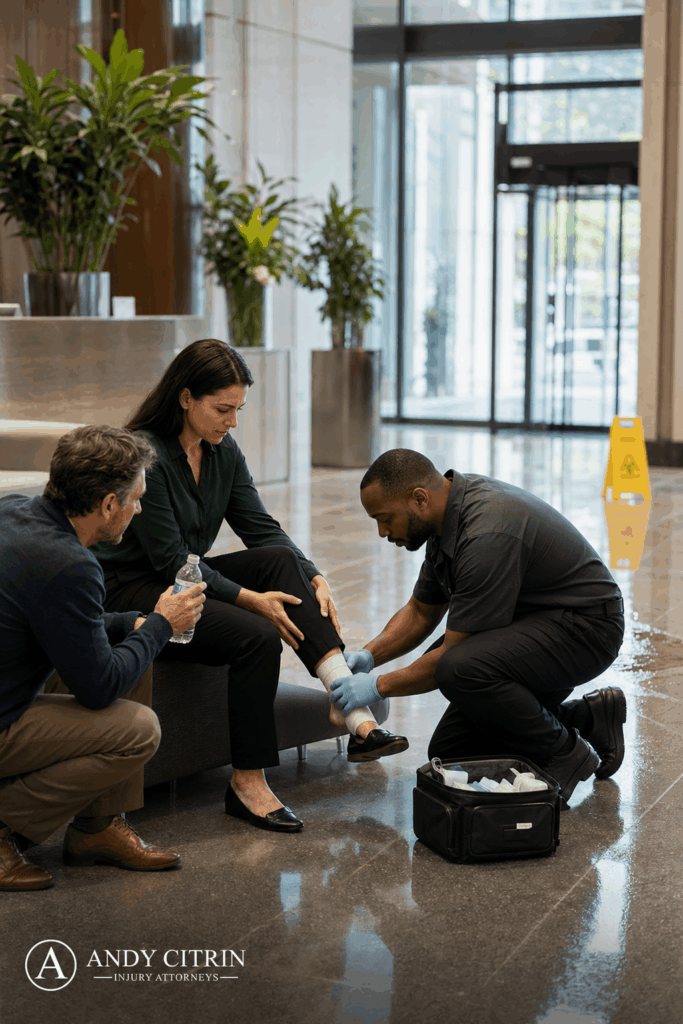
Victims slip on a wet or slippery floor.
Victims trip over obstructions or uneven surfaces.
This happens when someone steps on something and falls, such as a missing step on a staircase, a hole in the floor or a broken handrail.
Victims slip on a wet or slippery floor.
Victims trip over obstructions or uneven surfaces.
This happens when someone steps on something and falls, such as a missing step on a staircase, a hole in the floor or a broken handrail.

Your lawyer must demonstrate that the property owner knew about the hazard or that he or she should have reasonably known about it through regular inspections.
These types of evidence can support your case:
These documents can show whether regular inspections were conducted and if any hazards were noted but not addressed.
Records of repairs or lack thereof can indicate whether the property manager was aware of the hazardous condition and failed to fix it.
Photos or videos of the hazardous condition can be crucial. If the condition was present for a long time, it might suggest that the property manager should have known about it.
If the slip and fall occurred in a commercial setting, an incident report filed with the management can provide details about the accident and any prior knowledge of the hazard.
You must prove you had a legal right to be on the property, either as an invitee or licensee. Trespassers typically have limited rights under premises liability law.
Types of evidence that may show you had the legal right to be on the property include:
Any written or verbal invitation from the property owner or tenant can show you were allowed to be there. This could include emails, text messages or even a formal invitation.
If you were on the property as a customer or guest, receipts, tickets or any proof of purchase can demonstrate you had a legitimate reason to be there.
Statements from people who saw you enter the property or who can confirm you had permission to be there.
Video evidence showing you entering the property through a main entrance or interacting with staff can support your claim that you were not trespassing.

Your lawyer must demonstrate that the property owner knew about the hazard or that he or she should have reasonably known about it through regular inspections.
These types of evidence can support your case:
These documents can show whether regular inspections were conducted and if any hazards were noted but not addressed.
Records of repairs or lack thereof can indicate whether the property manager was aware of the hazardous condition and failed to fix it.
Photos or videos of the hazardous condition can be crucial. If the condition was present for a long time, it might suggest that the property manager should have known about it.
If the slip and fall occurred in a commercial setting, an incident report filed with the management can provide details about the accident and any prior knowledge of the hazard.
You must prove you had a legal right to be on the property, either as an invitee or licensee. Trespassers typically have limited rights under premises liability law.
Types of evidence that may show you had the legal right to be on the property include:
Any written or verbal invitation from the property owner or tenant can show you were allowed to be there. This could include emails, text messages or even a formal invitation.
If you were on the property as a customer or guest, receipts, tickets or any proof of purchase can demonstrate you had a legitimate reason to be there.
Statements from people who saw you enter the property or who can confirm you had permission to be there.
Video evidence showing you entering the property through a main entrance or interacting with staff can support your claim that you were not trespassing.
An invitee is invited by the property owner for business or as a member of the public, such as a customer at a retail shop along US-98 in Daphne.
Property owners owe invitees the highest level of care. They must take reasonable measures to make the premises safe for invitees and warn of dangers they know or should know about. There may be an obligation to regularly inspect the property for dangers.
However, if an invitee acts recklessly or ignores hazardous warning signs, it could eliminate the property owner’s liability. Alabama does not allow injured victims to seek any compensation if they are even one percent at fault due to the state’s contributory negligence rules.
A licensee is on the property for their own purposes, such as a social guest. Property owners cannot willfully cause injury to licensees. They must also avoid exposing licensees to conditions created through their own negligence. If a property owner discovers a hazard, he or she may need to warn the licensee about it, otherwise there may be liability.
If a licensee engages in risky behaviors or fails to heed warnings about known dangers, the property owner’s liability could be dismissed.
Trespassers enter the property without the owner’s permission. Although property owners generally have no duty to ensure trespassers’ safety, they must still avoid willfully causing harm.
That said, property owners may owe a higher duty of care to child trespassers, especially if the property contains features like a swimming pool or playground likely to attract children.
An invitee is invited by the property owner for business or as a member of the public, such as a customer at a retail shop along US-98 in Daphne.
Property owners owe invitees the highest level of care. They must take reasonable measures to make the premises safe for invitees and warn of dangers they know or should know about. There may be an obligation to regularly inspect the property for dangers.
However, if an invitee acts recklessly or ignores hazardous warning signs, it could eliminate the property owner’s liability. Alabama does not allow injured victims to seek any compensation if they are even one percent at fault due to the state’s contributory negligence rules.
A licensee is on the property for their own purposes, such as a social guest. Property owners cannot willfully cause injury to licensees. They must also avoid exposing licensees to conditions created through their own negligence. If a property owner discovers a hazard, he or she may need to warn the licensee about it, otherwise there may be liability.
If a licensee engages in risky behaviors or fails to heed warnings about known dangers, the property owner’s liability could be dismissed.
Trespassers enter the property without the owner’s permission. Although property owners generally have no duty to ensure trespassers’ safety, they must still avoid willfully causing harm.
That said, property owners may owe a higher duty of care to child trespassers, especially if the property contains features like a swimming pool or playground likely to attract children.
Cost of emergency room visits
Hospital stays
Surgeries
Medications
Any necessary medical supplies associated with treating your injuries
And more
Physical therapy
Occupational therapy
Other treatments to restore function and mobility

Daphne Slip and Fall Lawyers